- Roland’s Riff
- Posts
- Playing It Safe IS Risky
Playing It Safe IS Risky
You're Avoiding The Wrong Risks
TL;DR: Most founders define risk as losing money, but the larger risk is often missing opportunity. Playing it safe can cap upside and limit long-term outcomes. Sophisticated decision-making focuses on asymmetric risk, structuring situations where potential upside significantly outweighs downside.
Most Founders Misunderstand Risk
Most founders think they understand risk.
They define it as losing money.
Making a bad hire, launching something that fails or investing in the wrong opportunity.
So they try to minimize risk…they play it safe.
And in doing so, they often take on a different kind of risk entirely.
Risk Isn’t Just Loss
There are two types of risk in business.
The risk of losing money and the risk of missing opportunity.
Most founders are highly attuned to the first. Very few think seriously about the second.
But over time, missed opportunities tend to be far more expensive than failed attempts.
Playing It Safe Has a Cost
Safe decisions feel rational. They keep the business stable, they avoid complexity and they don’t take unnecessary chances.
But “safe” often means:
not entering a new market
not pursuing a partnership
not making an acquisition
not investing in growth
Each of those decisions reduces downside, but it also caps upside.
Asymmetric Risk
Sophisticated investors think differently about risk.
They look for situations where:
Downside is limited. Upside is significant.
That’s asymmetric risk and it’s not about avoiding risk, it’s about structuring it.
A well-structured deal, partnership, or investment can create a situation where the potential upside outweighs the downside by a wide margin.
That’s where real growth happens.
Founders Avoid the Wrong Risks
Many founders avoid opportunities that feel uncertain:
Equity deals.
Strategic partnerships.
Acquisitions.
Because they perceive them as risky.
At the same time, they accept risks that feel familiar:
Stagnation. Over-reliance on one business. Slow growth.
Those risks don’t feel like risks, but they are, and they compound over time.
Risk Is a Function of Structure
What makes something risky isn’t the idea.
It’s how it’s structured. The same deal can be reckless or intelligent depending on:
how capital is deployed
how downside is protected
how incentives are aligned
This is why two founders can look at the same opportunity and reach completely different conclusions.
One sees danger, the other sees leverage.
The Off-the-Org-Chart Perspective
The question isn’t:
How do I avoid risk?
It’s:
Which risks are worth taking?
And more importantly:
How do I structure them so the upside justifies the downside?
Because avoiding all risk doesn’t make a business safe.
It makes it limited.
— Roland
Want more than just the weekly deep dives? On Instagram we share quick tips, behind-the-scenes looks, and first access to what’s coming next.
📲 Follow @RolandFrasier on Instagram and join the community.
Whats Going On Recently
Keep More Of Your Money: PRIME can show you how to protect yourself, grow assets, build business funding, and how to take advantage of 250+ unique tax deductions. Schedule Your Strategy Session Here

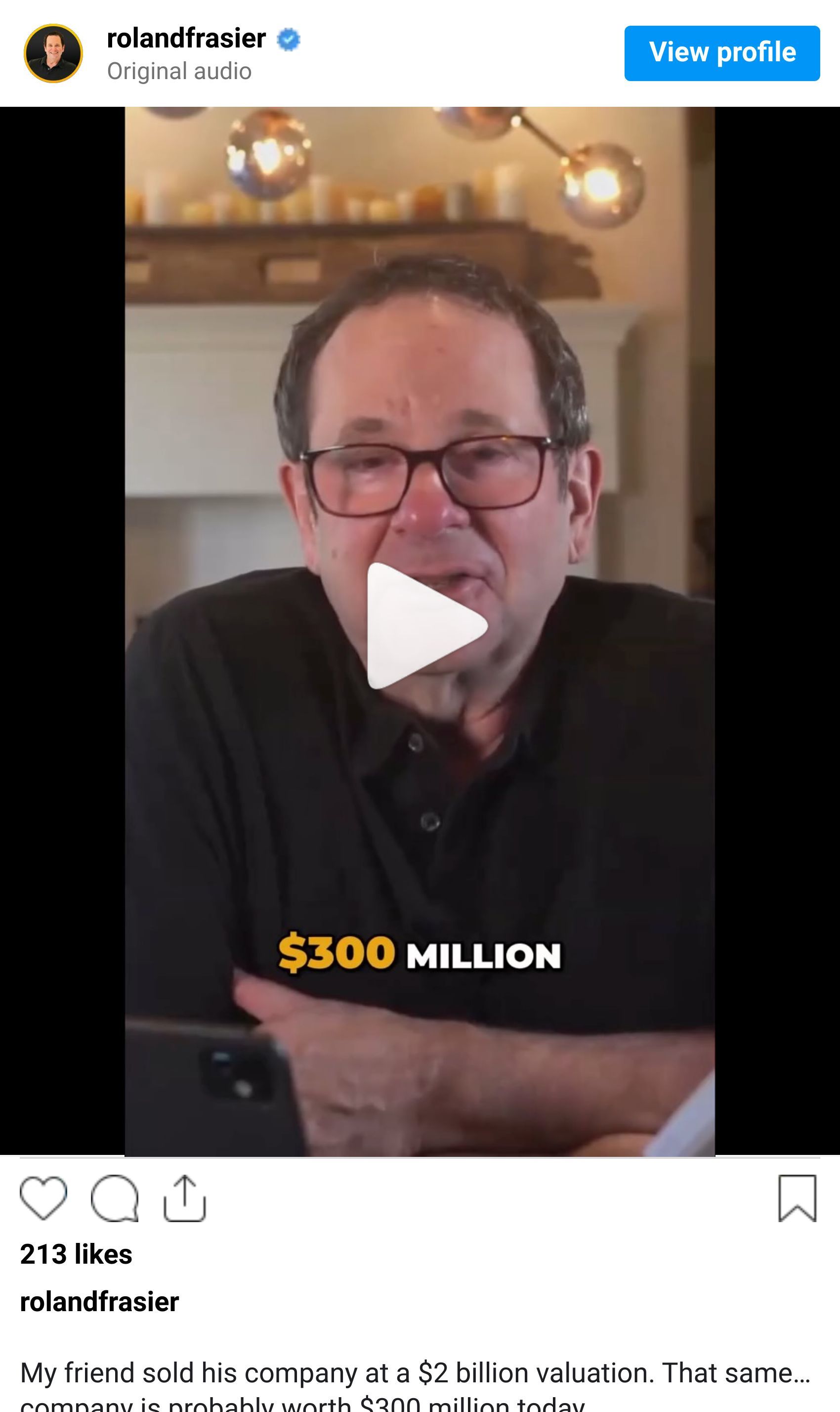
My friend sold his company for $2 billion.
That same company would likely be worth a fraction of that today.
Same business, different market and completely different outcome.
Most founders focus on growing EBITDA and assume the multiple will still be there when they’re ready.
The market doesn’t work that way. The hardest part of an exit isn’t building value, it’s knowing when the market will actually pay for it.
Would you take the number now… or risk it for more later? Watch the video below.

Thinking About Exiting Your Business?
You’ve built something incredible, now it’s time to make sure you get the most from your exit. We’ve helped countless entrepreneurs maximize their business sales, ensuring they walk away with more than just a deal, they walk away with the best deal possible.
Want to see what’s possible for you? Schedule a complimentary call (click here) today to see how I can help you get the most out of your exit.